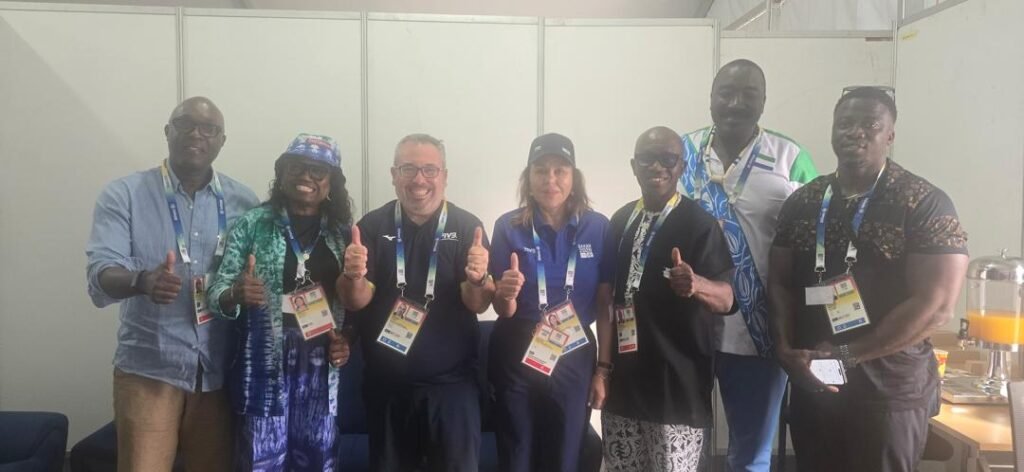
L to R: Sierra Leone’s Minister of Sports, Madam Augusta James-Teima; NOC/CGA-SLE President, Prince Vandy Sualley; and NOC/CGA-SLE Secretary General and National Volleyball Federation President, Ahmed Khanou, alongside FIVB President, Fabio Azevedo; Yu Cao of the FIVB Beach Volleyball Department; and Hitesh Maholtra of FIVB National Federation Relations and Volleyball Empowerment, following their strategic meeting on Beach Volleyball development, held on the margins of the Dakar 2026 Youth Olympic Games.
Dakar, Senegal – 4 November 2026
The National Olympic Committee of Sierra Leone (NOC/CGA-SLE), the National Volleyball Federation and the Fédération Internationale de Volleyball (FIVB) have explored a long-term development pathway aimed at strengthening Beach Volleyball in Sierra Leone and positioning the country for potential qualification for the Brisbane 2032 Olympic Games.
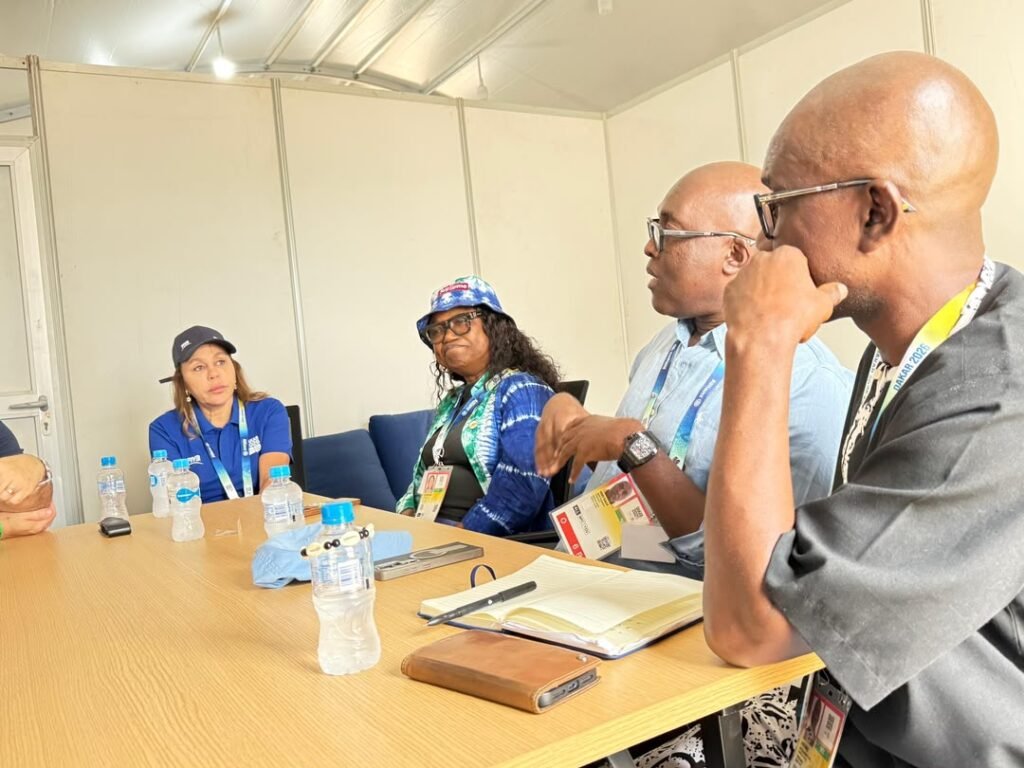
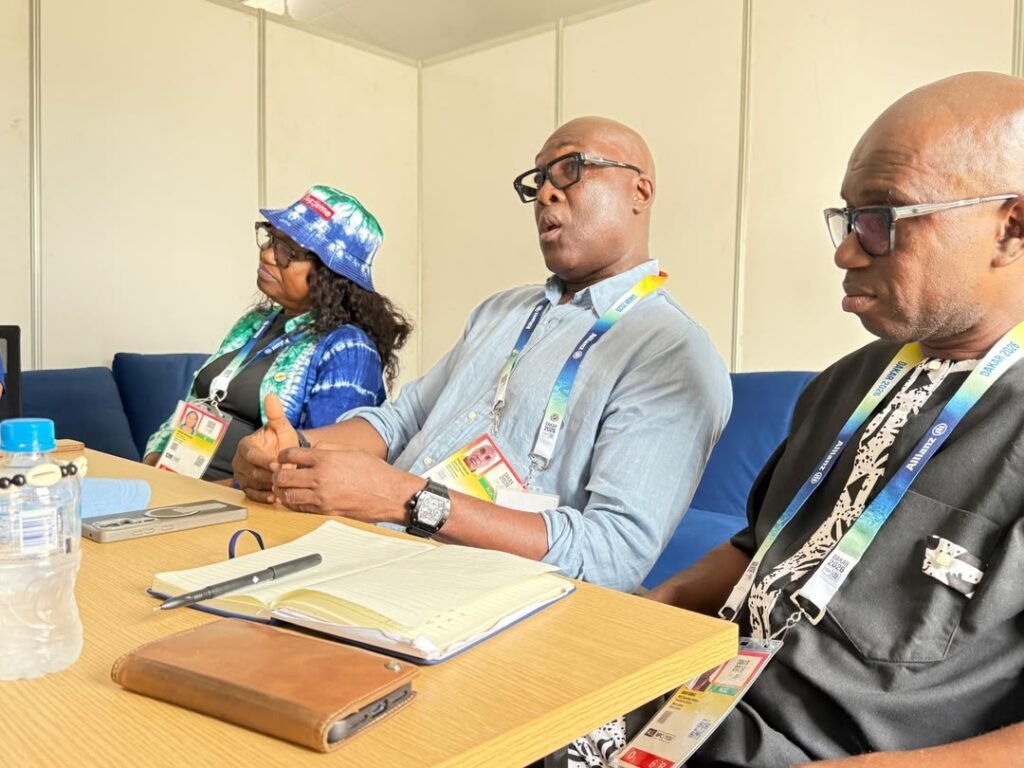
The meeting, held on the margins of the Dakar 2026 Youth Olympic Games, brought together Madam Augusta James-Teima, Minister of Sports of Sierra Leone; Prince Vandy Sualley, President of NOC/CGA-SLE; Ahmed Khanou, NOC/CGA-SLE Secretary General and President of the National Volleyball Federation; Fabio Azevedo, President of FIVB; Yu Cao of the FIVB Beach Volleyball Department; and Hitesh Maholtra, responsible for National Federation Relations and Volleyball Empowerment at FIVB.
The engagement focused on opportunities for athlete development, coaching enhancement, international competition, athlete retention and sustainable investment in Beach Volleyball in Sierra Leone.
A key focus was building on FIVB’s ongoing support through its Volleyball Empowerment Programme, including the current three-month coaching project delivered by local coaches. The partners discussed aligning this support with a structured national development plan, linking talent identification, athlete retention, technical development and international exposure.
Building a pathway towards Brisbane 2032
The proposed pathway will establish progressive milestones, including preparation for the 2029 Beach Volleyball World Championships, as part of a longer-term ambition towards Brisbane 2032.
Priority areas will include identifying promising athletes, strengthening coaching capacity, organising targeted training camps and expanding participation in regional and international competitions.
NOC/CGA-SLE President, Prince Vandy Sualley, reaffirmed the Committee’s commitment to supporting national federations through strategic partnerships, coordinated investment and sustained athlete development initiatives.
He emphasised the importance of collaboration with international sporting bodies and the effective use of available Olympic Solidarity opportunities to strengthen Sierra Leone’s sporting structures and improve the country’s international competitiveness.
Education, athlete retention and international opportunities
The meeting also addressed one of the important challenges facing Sierra Leonean sport: retaining talented young athletes while providing opportunities to combine sporting development with education and career progression.
FIVB’s cooperation with KIIT University in Bhubaneswar, India, was identified as a potential avenue for exploring academic scholarships for promising Sierra Leonean athletes alongside structured sporting development. Opportunities to establish connections with the United States National Collegiate Athletic Association (NCAA) were also discussed.
NOC/CGA-SLE Secretary General and National Volleyball Federation President, Ahmed Khanou, reaffirmed the Federation’s commitment to working with FIVB, the Confederation of African Volleyball (CAVB) and the NOC to translate the discussions into a practical and sustainable development programme.
He highlighted Sierra Leone’s growing Beach Volleyball culture, emerging talent and encouraging performances in regional and continental competitions. He stressed the importance of consolidating these achievements through structured athlete development, quality coaching, regular international exposure and educational opportunities.
Khanou also reiterated the Federation’s ambition to position Sierra Leone as a destination for African Beach Volleyball competitions, particularly youth and age-group events, in collaboration with CAVB.
Hosting opportunities and national development
The country’s growing enthusiasm for Beach Volleyball was recognised as an important foundation for expanding participation and raising the sport’s national profile.
Hosting African Beach Volleyball competitions was identified as an opportunity to promote the sport, expose local athletes to international competition and strengthen Sierra Leone’s standing within the continental volleyball community.
The proposed hosting ambitions will require coordinated planning around facilities, event management, technical requirements, financing and alignment with the international competition calendar.
Coordinated institutional support and next steps
The partners also explored opportunities for complementary support through the International Olympic Committee’s Olympic Solidarity programme, with NOC/CGA-SLE expected to play a coordinating role alongside the National Volleyball Federation and FIVB.
As an immediate follow-up, Ahmed Khanou, Yu Cao and FIVB representatives will coordinate the initial technical work covering the Beach Volleyball development pathway, coaching priorities, athlete education opportunities and potential hosting arrangements.
The National Volleyball Federation will provide details of its current athlete groups, coaching arrangements, proposed competition calendar and hosting ambitions to inform the development of a comprehensive programme, including its budgetary requirements and respective institutional responsibilities.
The engagement marks an important step towards strengthening Beach Volleyball in Sierra Leone through coordinated institutional partnerships, investment in young talent and a clear long-term performance vision.
For NOC/CGA-SLE, the initiative reflects its broader commitment to strengthening national federations, expanding opportunities for young athletes and building the technical and institutional foundations necessary for Olympic success.
The ambition is clear: develop the talent, retain the athletes, strengthen the system and establish a sustainable pathway towards Olympic qualification at Brisbane 2032.


Leave A Comment